
Appanoose Wanted List Status
Appanoose County publishes no sheriff's most wanted list. Nothing on the sheriff's site advertises one. The jail pages, FAQ material, and navigation menus all come up empty. That means no verified photo roster, reward policy, Crime Stoppers program, or "Warrant Wednesday" series exists to check. The absence says nothing about warrants themselves, though. It only means the county has not posted a public list where residents can find it.
The gap matters. A most-wanted page is a publicity tool that spotlights a few chosen names. A warrant, by contrast, is a court order authorizing an arrest. Many warrants never appear on any published list anywhere. Appanoose County offers neither a curated roster nor a full online warrant search. A private directory, a social media post, or an old booking photo can't replace an official check with the sheriff's office itself.
No listing fields can be described here. No official listing exists. Promising photographs, physical descriptions, charge labels, caution flags, or update dates would just be invented. Those fields appear on other counties' pages, but attaching them to Appanoose County would mislead people. A future sheriff could launch a list at any time, so start each new search from the official sheriff navigation rather than a saved private URL.
Check Appanoose County Warrants
Work a straight chain when a warrant might touch you or someone close. Get an attorney first, if you can manage it. Next, contact the Appanoose County Clerk of District Court and the Appanoose County Sheriff's Office. Say plainly that you want to confirm current status. Then ask how to resolve the matter safely. Do not fish for ways to dodge service.
- Write down the full legal name and any known case number.
- Speak with counsel about confirmation and a lawful appearance or surrender.
- Call the clerk at 641-856-6101 for court-file information.
- Call the sheriff at 641-437-7100 for current agency guidance.
- Follow the directions given by counsel, the court, or law enforcement.
Know what kind of warrant you are chasing. Some are arrest warrants from a criminal case. Others are bench warrants, issued after someone missed a court date or ignored an order. Only fresh, official information can tell you whether either type is still active, and each of the three contacts above plays a different role in finding out.
A lawyer protects your rights. A lawyer can also arrange a controlled response, which matters more than most people expect. The clerk explains what court information is public and how to pull a file. The sheriff gives current agency instructions, though phone staff may hold back on what they can confirm. Calling a pile of unrelated agencies, or trusting an automated people-search result, adds noise rather than accuracy.
Why Appanoose Searches Miss Warrants
Why do so many Appanoose searches come up empty? Iowa Courts Online offers free basic docket information. It is not a live warrant checker, and it is not the official court record. Iowa's restricted-record policy lets a criminal case stay confidential while an arrest warrant is outstanding. So a blank result can mean restricted access, a brand-new filing, a spelling mismatch, or a case that simply has not posted yet.
When a case does show up publicly, check the county, the name, the filing date, the charge entries, and the status. New cases typically appear online within one business day; citations can take up to 14. Whatever the index says, the clerk's file controls. If the index carries an error, ask the Appanoose clerk to fix it or pull public documents at the courthouse terminal. The official court directory shows exactly where that follow-up belongs.
View the Appanoose court directory and clerk details.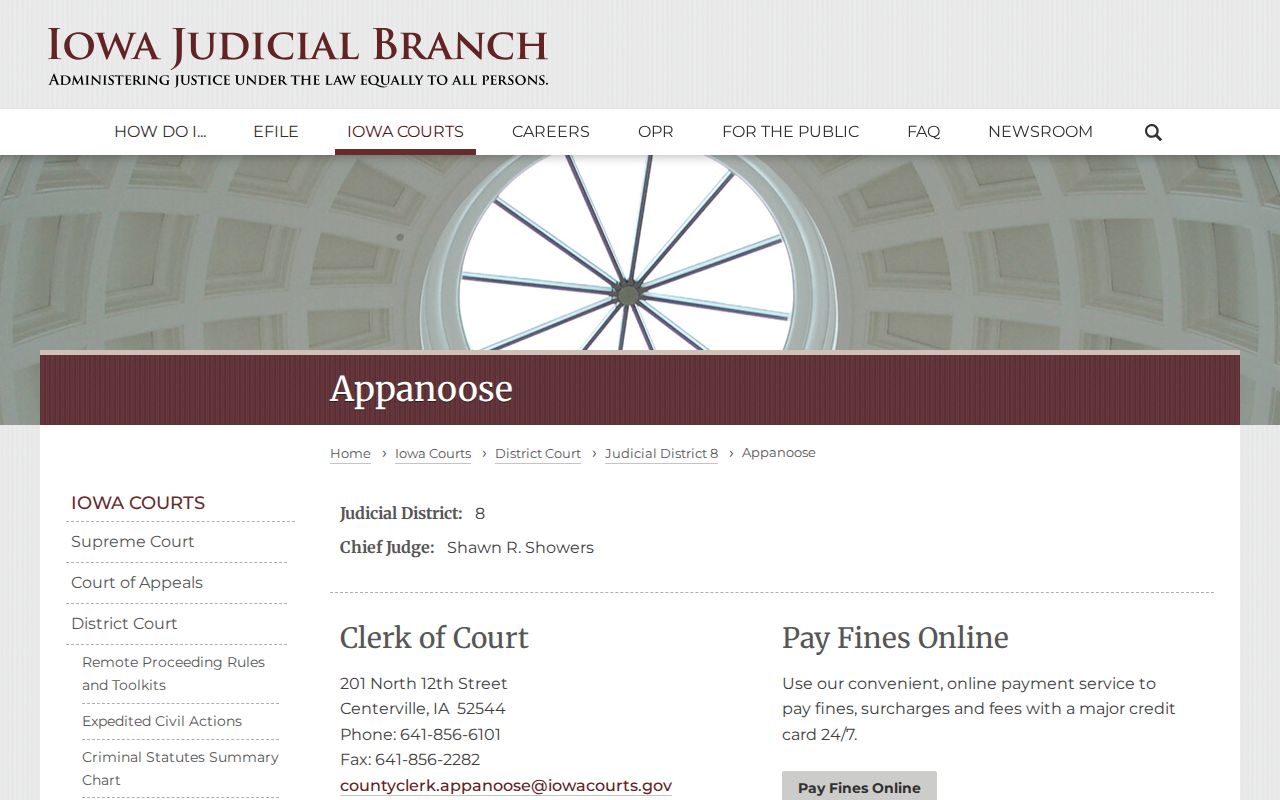
The captured directory is a contact route, not a public list of wanted people.
Appanoose Wanted Tips App
Appanoose County also has a smartphone app. The county-branded "Appanoose County Sheriff Iowa" app arrived in 2025, and its verified store descriptions promise sheriff news, public-safety updates, crime reporting, and a tip channel. Notice what is missing: no wanted-person module, no warrant search, no inmate roster, no booking photos. That gap is worth remembering.
Before installing, confirm the publisher. Get the iPhone version or the Android version only from the official stores. The app handles general information and non-emergency tips, and its own listing says it is not for emergencies.
See the official Android app interface and description.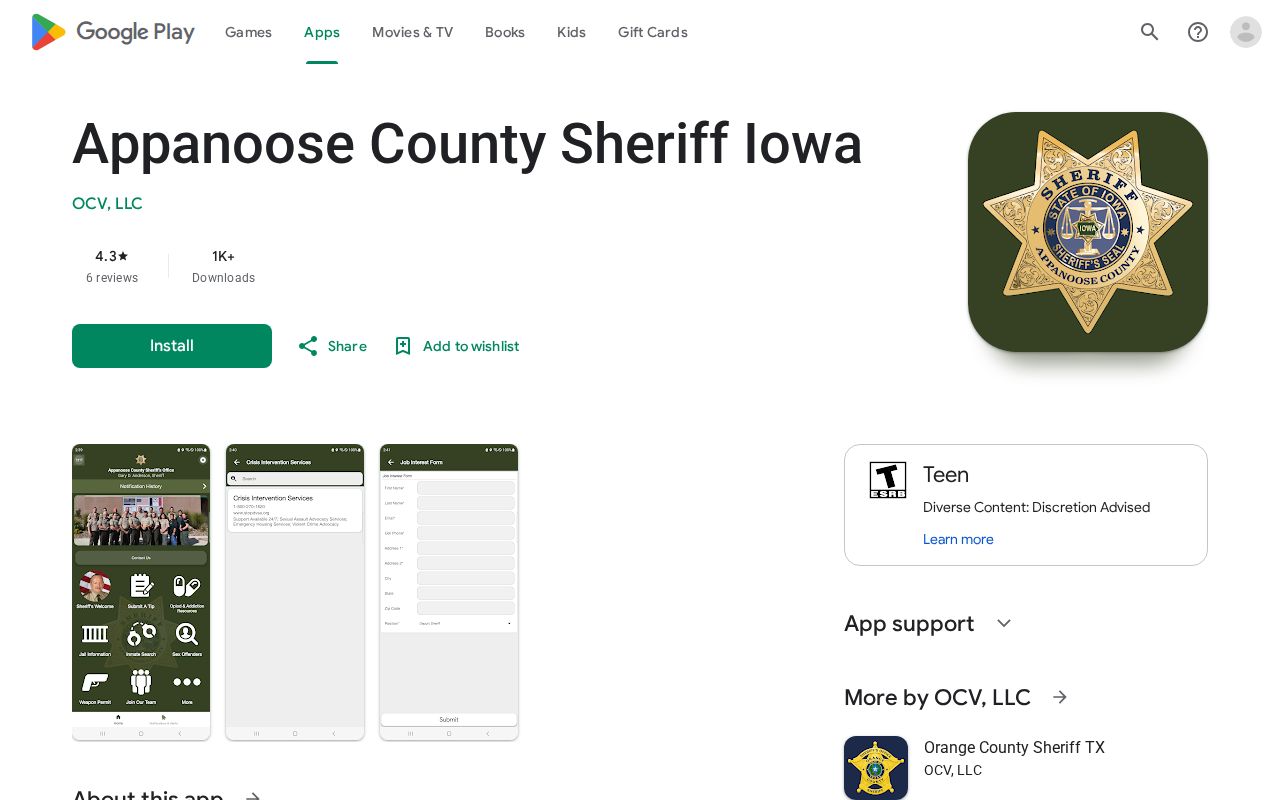
One caution about the app. It offers a way to send tips. Seeing a person's name or face there establishes nothing about a warrant. App news can help you spot an official announcement, yet announcements age fast. Check the date and wording against a current answer from the court or the sheriff. And read nothing into a disappearance from the screen; removal does not prove service, cancellation, dismissal, or release. The store page describes features, not anyone's legal status.
Report Appanoose Wanted Tips
Reporting is simple if you keep it in the right lane. Call 911 for any immediate threat. Non-emergency tips go to the sheriff's main line or the verified app. Share facts: location, time, what the vehicle looked like, which way it went. Never approach, follow, restrain, or confront anyone because a face resembles an old image.
Appanoose County Sheriff's Office22158 Dewey Rd.
Centerville, IA 52544
Main: 641-437-7100
Jail: 641-437-7106
No tip line here comes with a guaranteed reward. Anonymity is not a given either. Ask the sheriff's office directly how your information will be handled before you share a name, number, or anything else that could identify you.
A good tip sticks to what you actually witnessed. Say what you saw, where, and when. Keep names and photos off social media, since a case of mistaken identity spreads fast there and can derail official work. Let the sheriff decide whether your information fits an active matter.
Appanoose Arrest Records After Capture
Say someone on the wanted list gets picked up. Booking would happen at Appanoose County Jail. The county posts no live roster online. It also does not publish booking photos. Use IowaVINE to check current custody, or just call the jail. Want a booking record or photo on file? Request it from the sheriff under Iowa Code chapter 22. The Appanoose County booking-record hub walks through each of these separate channels.
- Booking
- The jail intake process after an arrest.
- Bond
- Terms set for release while the case is pending.
- Disposition
- The later court result, such as dismissal, plea, acquittal, or judgment.
- Warrant
- A court order authorizing law enforcement action.
A booking photo marks an arrest, nothing more. Charges listed at intake can shift later, at the first court appearance, during prosecutor review, or as the case unfolds. For where a case truly stands, check the public docket and the clerk's official file.
Custody tools answer different questions. Pick the right one. IowaVINE handles status alerts for participating county jails and state corrections, though it shows no photographs. The Iowa Department of Corrections search tracks only people in state custody, and it updates weekly. Neither serves as an Appanoose County warrant portal. People also move between local jail, release, supervision, and state custody, and each record lags behind on its own schedule.
Verify Appanoose Wanted Claims
Appanoose County publishes no official wanted portal. The sheriff FAQ and navigation make that clear. Private sites and social accounts pose as shortcuts. They often carry stale charges, confuse namesakes, or skip later court developments. For an active-warrant question, only the clerk or the sheriff will do.
Review the sheriff's official FAQ and available services.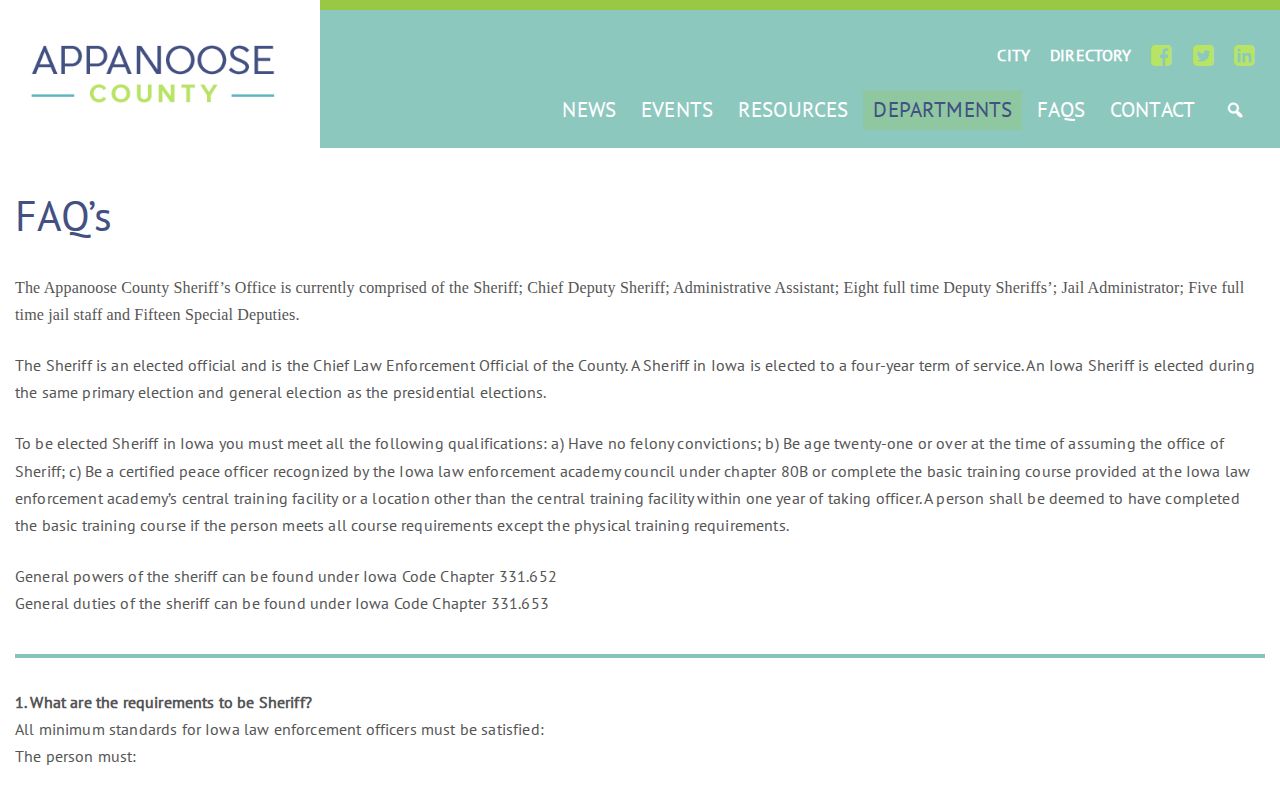
The official page supplies agency information but no names, wanted photographs, or warrant status fields.
Use the same identity checks throughout: full name, date context, Appanoose County case details, and the originating agency. If the question concerns your own legal exposure, counsel can coordinate confirmation and the safest lawful next step. A rumor, absence from search, or private profile is not a dependable answer.
Old booking photographs are especially poor wanted indicators. They may remain online after release, dismissal, or a later court result, and a private page may not reflect an expungement or correction. Conversely, a person with an active matter may have no public photograph. Confirm the warrant itself, not the presence or absence of a face online.
Verification should end with a dated note of the office contacted and the answer received. Status can change after a call, so ask how and when to confirm again if action is pending. If the clerk identifies a public case, read the latest docket entry rather than the oldest charge line. If the sheriff cannot disclose a status by phone, let counsel request the proper confirmation. These limits protect accuracy and keep the inquiry focused on safe resolution.
Appanoose County residents may encounter links that label a person “wanted” without naming a current agency source. Check the publication date, county, issuing court, and whether the page provides a working official reference. Screenshots can outlive the underlying post. Do not repost them, and do not make a public accusation based on a namesake or visual resemblance.
The sheriff's current navigation and FAQ remain the proper starting points for every renewed check.
A complete Appanoose County check also keeps civil and criminal records apart. The sheriff's civil-processing page lists civil services and fees, but it is not a warrant database and its copy charges are not booking-record fees. County forms likewise include other administrative documents without providing a warrant or wanted-person request form. These official absences support the direct contact route; they do not authorize a private service to fill the gap.
When the question follows a missed hearing, court notice, or recent police contact, provide counsel with the document date and any case identifier. Do not send a birth date or other sensitive identifier through an unverified app or directory. The clerk can explain public access, while legal advice must come from counsel. If public docket detail conflicts with a current official instruction, pause and resolve the mismatch through the originating office before acting on it.